Sierra Leone's Agricultural Landscape
Agriculture employs 60–70% of the population, contributes ~60% of GDP, and is the primary economic activity in all four provinces. Sierra Leone has 5.4 million hectares of arable land — yet the country spends $200+ million annually on rice imports alone.
Sierra Leone occupies 71,740 square kilometres on the West African coast. The country benefits from a tropical climate with abundant rainfall (2,000–3,000mm annually), year-round warmth (25–32°C), and naturally fertile soils enriched by river systems including the Rokel, Sewa, Moa, and Scarcies. Only a fraction of the arable land is currently under cultivation.
Despite these favourable conditions, Sierra Leone remains a net food importer. Closing the import gap through local farming is one of the most important economic and social objectives facing the nation.
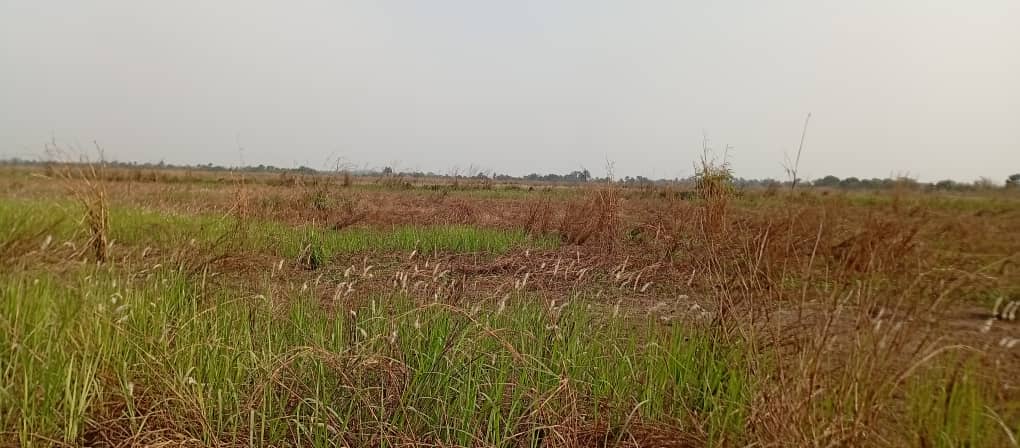
This guide draws on our direct experience operating Kabba Agricultural Enterprise — a 52-acre commercial farm in Tonkolili District producing rice, groundnut, and pigeon pea. What follows is not theoretical — it reflects what we see, grow, and learn on the ground every season.
History of Farming in Sierra Leone
Agriculture has been the backbone of life in what is now Sierra Leone for centuries. The indigenous peoples of the region — Temne, Mende, Limba, Kono, and others — developed sophisticated farming systems adapted to local conditions long before colonial contact. Shifting cultivation (slash-and-burn), intercropping, and communal farming traditions sustained communities across the region's diverse landscapes.
Colonial Period (1808–1961)
Under British colonial rule, Sierra Leone's agricultural economy was reshaped around export commodities. The colonial administration promoted cocoa, coffee, palm oil, and ginger for the export market, while subsistence food production — primarily rice — continued using traditional methods. The dual structure of export-oriented plantation agriculture alongside smallholder food farming established patterns that persist to this day.
Post-Independence (1961–1991)
After independence in 1961, successive governments recognised agriculture as central to national development. The Sierra Leone Produce Marketing Board controlled export crop purchasing. Rice production initiatives were launched, including the introduction of improved seed varieties and mechanisation trials. However, urban-focused development policies, declining terms of trade for agricultural exports, and institutional challenges limited the sector's modernisation.
Civil War and Recovery (1991–2010)
The Sierra Leone civil war (1991–2002) devastated the agricultural sector. Farmland was abandoned, infrastructure destroyed, and rural populations displaced. Post-war recovery focused on resettling farming communities, restoring seed stocks, and rebuilding agricultural extension services. International organisations played a critical role during this period, providing seeds, tools, and training to restart food production.
The Ebola Crisis (2014–2016)
Just as the agricultural sector was regaining momentum, the Ebola outbreak disrupted farming across the country. Quarantine restrictions prevented farmers from accessing their fields during critical planting and harvesting periods. The crisis underscored the fragility of food systems and the importance of resilient, locally-rooted agricultural enterprises.
Modern Era (2016–Present)
Sierra Leone's agricultural sector has entered a period of renewed investment and transformation. The government's Feed Salone initiative and National Agricultural Transformation Programme, combined with growing private sector engagement and international partnerships, are creating conditions for sustained agricultural growth. Enterprises like ours represent the emerging generation of commercial farming operations that combine modern techniques with deep community roots.
Agricultural Regions and Provinces
Sierra Leone is divided into four provinces and one area (the Western Area), each with distinct agricultural characteristics. Understanding regional differences is essential for crop selection, investment planning, and development strategy.
Northern Province
The Northern Province — encompassing Bombali, Tonkolili, Port Loko, Kambia, Koinadugu, Falaba, and Karene districts — is the agricultural heartland of Sierra Leone. It contains the country's largest rice-producing districts, with vast inland valley swamps and fertile upland areas. The Scarcies river basin and Rokel river plains provide particularly rich alluvial soils.
Tonkolili District, where Kabba Agricultural Enterprise operates, is one of the most productive districts in the Northern Province. Covering 7,003 square kilometres, it offers fertile lowland and upland terrain, adequate rainfall (2,000–2,500mm annually), and an established farming tradition centred on rice, groundnut, and legume production.
Southern Province
The Southern Province (Bo, Bonthe, Moyamba, and Pujehun districts) is known for rice production, cocoa, coffee, and palm oil. Bo District is a significant commercial centre, and the region's coastal areas support both fishing and farming. The province has strong potential for oil palm expansion and cocoa rehabilitation.
Eastern Province
The Eastern Province (Kenema, Kono, and Kailahun districts) is historically Sierra Leone's primary cocoa and coffee producing region. Kenema District also supports significant rice and cassava production. The province's proximity to the Guinea and Liberia borders creates cross-border market opportunities for agricultural produce.
Western Area
The Western Area, which includes Freetown and its surrounding peninsula, has limited agricultural land due to urbanisation. However, peri-urban vegetable farming, poultry production, and market gardening serve the capital's food demand. The Western Area is the primary market destination for agricultural produce from all provinces.
Climate, Seasons, and the Farming Calendar
Sierra Leone has a tropical monsoon climate with two distinct seasons that define the agricultural calendar:
The Rainy Season (May–November)
The rainy season brings heavy rainfall — typically 2,000–3,000mm annually, with peaks in July and August. This is the primary growing season for most crops. Temperatures remain warm (24–28°C) with high humidity. The rains are essential for rain-fed agriculture, which accounts for the vast majority of farming in the country.
The Dry Season (December–April)
The dry season, particularly the period from December to February, sees significantly reduced rainfall. The Harmattan wind from the Sahara brings dry, dusty conditions. This period is used for harvesting, post-harvest processing, land clearing, and preparation for the next planting season. Some lowland and irrigated areas support dry-season vegetable and rice production.
The Sierra Leone Farming Calendar
January–March: Post-harvest processing, drying, and marketing of previous season's crops. Bush clearing and land selection for the coming season. Repair of tools and equipment.
April–May: Land preparation — brushing (clearing undergrowth), ploughing (increasingly mechanised with tractors), and burning of cleared vegetation. Seed selection and procurement. At Kabba Agricultural Enterprise, we hire tractors for mechanised ploughing during this period.
June–July: Main planting season. Rice nurseries are established, upland rice is direct-seeded, and groundnut and pigeon pea are cup-planted by hand. This is the most labour-intensive period, when our groundnut programme alone requires 150 mandays of planting labour.
August–September: Crop maintenance — first and second weeding, fertiliser application, bird-scaring for rice. This period coincides with the "hunger season" when food from the previous harvest is running low and new crops are not yet mature.
October–November: Harvesting begins as crops mature. Rice is cut, threshed, and dried. Groundnut is lifted and dried. This is a period of intense activity and significant labour demand.
December: Final harvesting, winnowing, bagging, and storage. Early-season marketing begins. Communities celebrate the harvest and begin planning for the next cycle.
Key Crops Grown in Sierra Leone
Sierra Leone's tropical climate supports a wide range of food and cash crops. The best crops to grow in Sierra Leone balance market demand, nutritional value, and suitability to local conditions.
Rice — The National Staple
Rice is consumed daily by the vast majority of Sierra Leoneans, making it the most important food crop in the country. Both upland rice (grown on hillsides and plateaus) and lowland/swamp rice (grown in valley bottoms and inland swamps) are cultivated. Despite strong domestic production, Sierra Leone remains a net rice importer, with consumption outstripping production by hundreds of thousands of metric tonnes annually.
Improved varieties including Rock 34 Hybrid, NERICA (New Rice for Africa), and ROK series varieties are being promoted to increase per-acre yields. At Kabba Agricultural Enterprise, we cultivate 17 acres of Rock 34 Hybrid rice — selected for its high yield potential and resilience to local growing conditions.
Groundnut (Peanut)
Groundnut is Sierra Leone's most important legume crop, serving as a cash crop, a protein source, and a cooking oil base. It is cultivated extensively across the Northern and Southern provinces. Groundnut cultivation is highly labour-intensive — it is typically cup-planted by hand, requiring careful spacing and soil contact. Our 17-acre groundnut programme uses 4,200 cups of seed per season.
Cajanus Cajan (Pigeon Pea)
Pigeon pea is gaining recognition in Sierra Leone for its nutritional value (high in protein, iron, and B vitamins) and its agricultural benefits as a nitrogen-fixing legume. By restoring soil fertility naturally, pigeon pea improves conditions for subsequent crop rotations — reducing dependence on synthetic fertilisers. We cultivate 17 acres of pigeon pea as a core part of our sustainable three-crop system.
Cassava
Cassava is one of Sierra Leone's most widely grown root crops, valued for its drought tolerance and ability to grow in poor soils. It is processed into garri (a fermented granular product), fufu, and flour. Cassava serves as a critical food security crop, particularly during periods when rice is scarce or expensive.
Palm Oil
Oil palm is native to Sierra Leone and palm oil production is a significant economic activity, particularly in the Southern and Eastern provinces. Palm oil is used for cooking domestically and has export potential. Oil palm plantations represent a long-term agricultural investment — trees produce fruit for 25+ years once established.
Cocoa and Coffee
Historically significant export crops, cocoa and coffee are grown primarily in the Eastern Province (Kenema, Kailahun, Kono districts). Post-war rehabilitation of cocoa plantations has been a focus of development efforts, with potential for Sierra Leone to re-establish itself as a quality cocoa origin.
Vegetables and Horticulture
Sweet potato, peppers, tomatoes, okra, cassava leaf, potato leaf, and other vegetables are grown across the country. Peri-urban vegetable farming near Freetown and other towns can be highly profitable due to strong demand and short growing cycles.
Types of Farming: Subsistence to Commercial
Agriculture in Sierra Leone operates along a spectrum from traditional subsistence farming to emerging commercial operations.
Subsistence Farming
The majority of Sierra Leone's farmers are smallholders cultivating less than 2 hectares (roughly 5 acres). These farmers primarily grow food for household consumption, selling any surplus at local markets. Tools are typically hand-held (hoes, cutlasses, sickles), and cultivation relies on manual labour. Shifting cultivation — clearing and burning forest or bush, farming for 1–3 years, then moving to new land — remains common in areas with available bush.
Semi-Commercial Farming
A growing number of farmers operate at a semi-commercial level, cultivating 5–20 acres with a mix of food and cash crops. These farmers may hire labour, purchase improved seeds, and sell a significant portion of their harvest. Farmer-based organisations (FBOs) help these producers aggregate their output for better market access.
Commercial Farming
Commercial agricultural enterprises like Kabba Agricultural Enterprise operate at larger scale with defined budgets, mechanised land preparation, improved seed varieties, and organised labour programmes. Commercial farms produce for market and aim to generate consistent returns while contributing to national food supply. Our 52-acre operation represents this category — large enough to achieve commercial efficiency, rooted enough to maintain community connection.
Plantation Agriculture
Large-scale plantation operations exist primarily in oil palm, rubber, and sugarcane. These operations, often backed by foreign investment, cultivate thousands of hectares. While they create employment and generate export revenue, they also raise questions about land rights, community impact, and food sovereignty that need careful management.
Food Security: Challenges and Solutions
Food security — the consistent availability of sufficient, safe, and nutritious food — remains one of Sierra Leone's most pressing challenges. Understanding the specific drivers of food insecurity is essential for developing effective responses.
The Rice Import Gap
Sierra Leone consumes an estimated 700,000–900,000 metric tonnes of milled rice per year, but domestic production covers only a portion of this demand. The resulting import gap costs the country hundreds of millions of dollars in foreign exchange annually, creates vulnerability to global price shocks, and means that Sierra Leone's food security is partly controlled by international markets and shipping logistics.
The Hunger Season
The period between planting and harvest — roughly July to September — is known as the "hunger season." Food stocks from the previous harvest are depleted, new crops are not yet mature, and food prices rise sharply in local markets. Rural communities, particularly those dependent on a single crop, are most vulnerable during this period.
Nutritional Deficiencies
Even where caloric needs are met through rice consumption, many Sierra Leonean communities face nutritional deficiencies — particularly in protein, iron, vitamin A, and zinc. Crop diversification — growing protein-rich legumes like groundnut and pigeon pea alongside rice — is one of the most effective strategies for improving nutritional outcomes.
How Local Farming Addresses Food Security
Every kilogram of food produced locally displaces imports, keeps foreign exchange in the domestic economy, and improves physical access to food for nearby communities. Enterprises that grow multiple complementary crops — as we do with our rice, groundnut, and pigeon pea system — address both caloric and nutritional needs simultaneously. Read more about how farming supports the Sierra Leone economy.
Agricultural Labour and Employment
Farming is the largest employer in Sierra Leone. In rural areas, agriculture is often the only viable livelihood. Understanding the labour dynamics of farming is critical for anyone assessing the sector's social and economic impact.
Labour Demands by Crop Stage
Each stage of the farming cycle creates distinct labour demands:
Land preparation: Brushing (clearing vegetation) and ploughing. Increasingly mechanised with tractor hire, but manual brushing still requires significant labour — our 52-acre operation requires brushing across all plots before tractor ploughing can begin.
Planting: The most labour-intensive phase. Cup-planting of groundnut and pigeon pea is done entirely by hand, requiring precision spacing. Rice may be transplanted from nurseries or direct-seeded.
Weeding: Two to three rounds of manual weeding are typically required per season. This is backbreaking work, usually done with hand hoes.
Harvesting: Rice is cut by hand with sickles, bundled, and transported to threshing sites. Groundnut is lifted from the soil and dried. Both processes require substantial community labour.
Employment Impact
At Kabba Agricultural Enterprise, our operations create hundreds of mandays of employment each season, distributed across planting, weeding, and harvesting activities. This employment directly benefits indigenous community members in Mamuntha Mayosoh Village and surrounding areas, with wages that circulate through local markets and support families, education, and healthcare access.
The Role of Women in Sierra Leone Agriculture
Women are the backbone of agriculture in Sierra Leone, performing an estimated 60–70% of all agricultural labour. They are involved in every stage of the farming cycle, with particular dominance in planting, weeding, harvesting, post-harvest processing, and marketing.
Women are the primary producers of vegetables, groundnuts, and rice in many communities. They manage household food security decisions, process crops into marketable products (such as groundnut paste and palm oil), and control much of the local food trade in rural markets.
Despite their central role, women farmers face significant barriers: limited access to land ownership (customary tenure systems often favour men), restricted access to agricultural credit, lower rates of extension service contact, and heavier unpaid domestic work burdens. Addressing these gender gaps is essential for unlocking the full productive potential of Sierra Leone's agricultural sector.
At Kabba Agricultural Enterprise, women constitute a significant portion of our seasonal labour force, particularly during planting and harvesting operations. Our leadership team is led by Strategic Lead Madam Jane Fea Kabba Sei Sillah — the District Agricultural Officer for Tonkolili — reflecting the critical role of women in agricultural leadership.
Government Initiatives and Policy
The Sierra Leone government has made agriculture a national development priority. Through the Ministry of Agriculture and Food Security (MAFS), several government agriculture initiatives shape the farming landscape:
Feed Salone
The government's flagship agricultural programme aims to achieve national food self-sufficiency by significantly increasing domestic production of rice and other staple crops. The initiative encompasses input subsidies, mechanisation support, and land development.
National Agricultural Transformation Programme
This comprehensive programme targets increased agricultural productivity through improved seed varieties, farmer training, commercial farming promotion, and rural infrastructure development including roads, storage facilities, and market centres.
Rice Self-Sufficiency Strategy
Specifically targeting Sierra Leone's largest food import, this strategy promotes distribution of improved rice seed varieties (including Rock 34 and NERICA varieties), subsidised fertiliser programmes, mechanised land preparation support, and post-harvest loss reduction through improved storage and processing.
Smallholder Commercialisation Programme
Supported by the World Bank and IFAD, this programme helps smallholder farmers increase their productivity and market engagement through farmer field schools, agricultural business centres, and farmer-based organisations.
District Agricultural Officers
At the local level, District Agricultural Officers (DAOs) coordinate extension services, distribute government-subsidised inputs, and ensure alignment between national policy and local implementation. Our Strategic Lead, Madam Jane Fea Kabba Sei Sillah, serves as the DAO for Tonkolili District — directly connecting our enterprise with agricultural development policy at the district level.
International Development Partners
Sierra Leone's agricultural development benefits from partnerships with major international organisations:
World Bank: Funds the Smallholder Commercialisation Programme and agricultural infrastructure projects including rural road rehabilitation and market facility construction.
FAO (Food and Agriculture Organisation): Provides technical assistance on crop production, pest management, fisheries, and agricultural statistics. Supports food security monitoring and early warning systems.
IFAD (International Fund for Agricultural Development): Focuses on rural poverty reduction through agricultural investment, targeting smallholder farmers and rural communities.
WFP (World Food Programme): Addresses acute food insecurity through food assistance programmes and school feeding initiatives, while supporting agricultural market development.
AfDB (African Development Bank): Finances agricultural transformation projects and infrastructure development supporting the farming sector.
GIZ and bilateral donors: Germany, UK, EU, Japan, and other bilateral donors support various agricultural development programmes including seed multiplication, extension services, and climate adaptation.
Agricultural Investment Opportunities
For investors and development partners, Sierra Leone's agricultural sector presents a compelling combination of challenges and opportunities.
Why Invest in Sierra Leone Agriculture?
Abundant land: 5.4 million hectares of arable land, much of it underutilised.
Guaranteed demand: Domestic consumption of rice alone creates a market worth hundreds of millions of dollars annually, most of which is currently served by imports.
Favourable climate: Year-round warmth and abundant rainfall support multiple crop types without irrigation in most areas.
Young workforce: A growing, youthful population available for agricultural employment.
Government support: Investment-friendly policies, input subsidies, and institutional support through SLIEPA (Sierra Leone Investment and Export Promotion Agency).
Investment Opportunities Across the Value Chain
Primary production: Commercial-scale crop farming (rice, groundnut, oil palm, cocoa). Processing: Rice milling, groundnut oil extraction, palm oil processing, cassava processing (garri, flour). Infrastructure: Agricultural storage and warehousing, cold chain development. Services: Tractor hire and mechanisation services, agricultural input supply, transport and logistics. Technology: Mobile-based market information platforms, agricultural fintech, weather monitoring systems.
Contact us to discuss investment and partnership opportunities with Kabba Agricultural Enterprise in Tonkolili District.
Sustainable Farming Practices
Long-term food security depends on farming practices that build soil health rather than deplete it. Sierra Leone is well-positioned to lead on sustainable agriculture in West Africa.
Crop Rotation and Legume Integration
Our three-crop system at Kabba Agricultural Enterprise is designed with sustainability at its core. Pigeon pea (Cajanus cajan), as a nitrogen-fixing legume, restores soil nitrogen naturally — reducing the need for synthetic fertilisers and improving soil structure for subsequent rice and groundnut rotations.
Integrated Pest Management
Rather than relying solely on chemical pesticides, integrated pest management (IPM) combines cultural practices (crop rotation, field hygiene), biological control, and targeted chemical application only when necessary. This approach protects both crop yields and environmental health.
Soil Conservation
Maintaining soil organic matter through crop residue management, composting, and avoiding excessive tillage helps preserve soil structure and fertility. In areas prone to erosion, contour farming and cover crops provide additional protection.
Agroforestry
Integrating trees and crops on the same land — a practice with deep roots in West African farming tradition — provides shade, wind protection, additional food and income sources, and long-term carbon sequestration.
Key Agricultural Statistics — Sierra Leone
| Indicator | Figure |
|---|---|
| Total land area | 71,740 km² |
| Arable land | ~5.4 million hectares |
| Population engaged in agriculture | 60–70% |
| Agriculture's contribution to GDP | ~60% |
| Annual rice consumption | ~700,000–900,000 metric tonnes |
| Annual rainfall | 2,000–3,000mm |
| Average temperature range | 25–32°C year-round |
| Main planting season | June–July |
| Main harvest period | October–December |
| Average farm size (smallholder) | Under 2 hectares (~5 acres) |
| Women's share of agricultural labour | 60–70% |