The Path to Agricultural Transformation
Agricultural development is central to Sierra Leone's national strategy for economic growth, poverty reduction, and food security. With approximately 60-70% of the population engaged in farming, improvements in the agricultural sector have a direct and immediate impact on the livelihoods of millions of Sierra Leoneans.
Despite significant challenges — including limited mechanisation, inadequate infrastructure, and the lingering effects of the civil conflict and the Ebola outbreak — the agricultural sector has shown resilience and potential. Both government and private sector actors are investing in transforming how Sierra Leone farms, processes, and distributes food.
Government Agricultural Initiatives
The Sierra Leone government, through the Ministry of Agriculture and Food Security, has launched several programmes aimed at modernising the agricultural sector:
National Agricultural Transformation Programme — A comprehensive initiative to increase agricultural productivity, improve market access, and promote commercial farming across the country.
Smallholder Commercialisation Programme — Supported by international partners, this programme helps smallholder farmers transition from subsistence to commercial farming through improved inputs, training, and market linkages.
Rice Self-Sufficiency Strategy — Recognising the nation's heavy dependence on rice imports, the government has prioritised increasing domestic rice production through improved seed distribution, subsidised fertiliser, and mechanisation support.
District Agricultural Officers (DAOs) — At the local level, DAOs coordinate agricultural extension services, support farming communities, and ensure alignment between national policy and local implementation. Our strategic lead, Madam Jane Fea Kabba Sei Sillah, serves as the DAO for Tonkolili District.
The Role of Private Agricultural Enterprises
While government programmes provide the policy framework, private agricultural enterprises are the engines of on-the-ground transformation. By investing their own capital, employing local labour, and taking the commercial risks of large-scale production, these enterprises fill a critical gap in the agricultural development ecosystem.
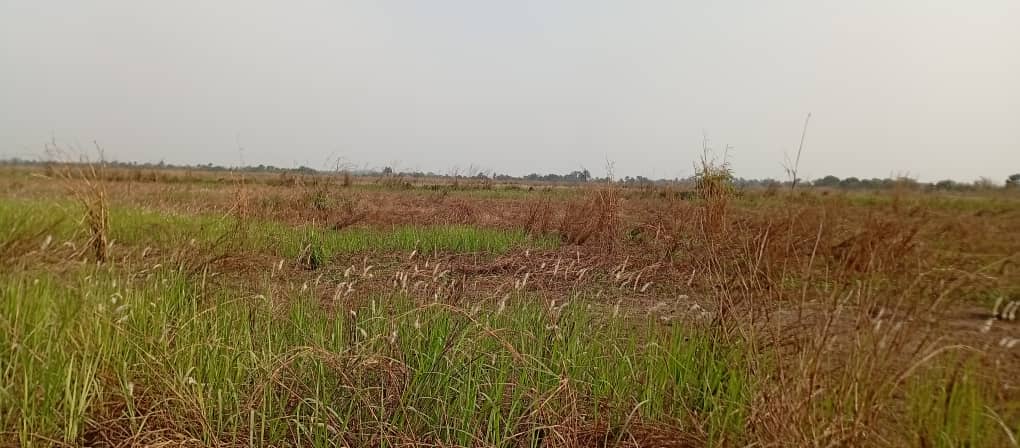
Kabba Agricultural Enterprise exemplifies this role. Operating 52 acres in Tonkolili District, the enterprise:
Produces three staple crops at commercial scale, contributing directly to domestic food supply.
Creates hundreds of mandays of employment each season for indigenous community members.
Uses improved seed varieties (Rock 34 Hybrid rice) and modern farming techniques to maximise yield.
Operates under the oversight of the District Agricultural Officer, ensuring alignment with government agricultural standards.
Key Areas for Agricultural Development
For Sierra Leone to achieve food security and reduce its dependence on food imports, several areas require continued investment and attention:
Mechanisation — Expanding access to tractors and farming equipment is essential for increasing the scale and efficiency of crop production. Enterprises like ours already hire tractors for land preparation, but broader access would benefit the entire sector.
Improved Seed Varieties — High-yield, disease-resistant seed varieties can dramatically increase output per acre. Sierra Leone's research institutions and seed multiplication programmes play a key role here.
Post-Harvest Infrastructure — Better storage facilities, processing equipment, and rural roads would reduce the significant post-harvest losses that currently undermine food production efforts.
Access to Finance — Agricultural lending remains limited in Sierra Leone. Expanded access to credit for farmers and agribusinesses would enable more investment in productive capacity.
Youth Engagement — With a young and growing population, engaging youth in modern agriculture — presenting farming as a viable, dignified livelihood — is critical for the sector's long-term sustainability.
International Partnerships
Sierra Leone's agricultural development benefits from partnerships with international organisations including the World Bank, the Food and Agriculture Organisation (FAO), the International Fund for Agricultural Development (IFAD), and the World Food Programme (WFP). These partnerships provide technical assistance, funding, and capacity building that complement domestic efforts.
Looking Ahead
The future of agriculture in Sierra Leone depends on sustained investment from both public and private sectors. With its fertile land, favourable climate, and committed farming communities, the country has every advantage needed to feed itself and even become a regional food exporter. The task is to mobilise these advantages through smart policy, private enterprise, and community engagement.
Kabba Agricultural Enterprise is proud to be part of this journey — one harvest at a time.